
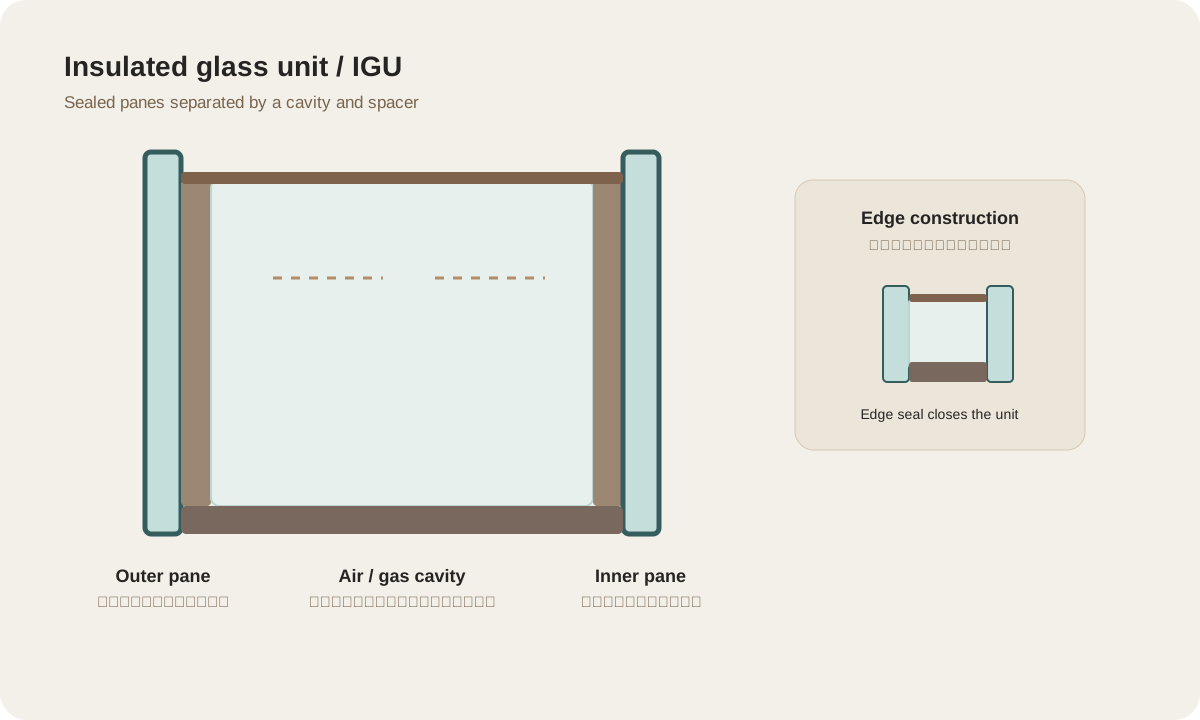
Glass construction
State pane thickness, cavity, spacer, and seal because they affect values and weight.

GLASS
Two panes separated by a sealed air or gas cavity to reduce heat transfer.
Request a quote| Common build-up | 5+12A+5, 5+16A+5, 5+20A+5 mm |
|---|---|
| Cavity | 12 / 16 / 20 mm |
| Options | Low-E, Laminated, Argon |
KEY FEATURES
Homes and condominiums
State pane thickness, cavity, spacer, and seal because they affect values and weight.
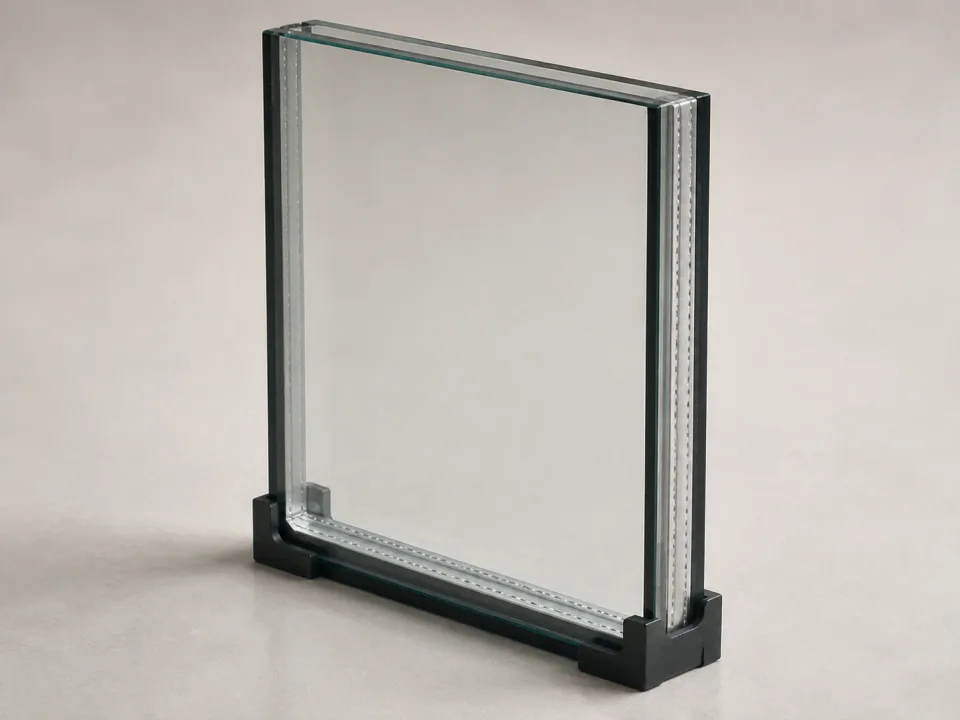
Total thickness and weight must fit the window, door, or façade receiving the unit.
Specify the build-up
State pane thickness, cavity, spacer, and seal because they affect values and weight.
Check the glazing pocket
Total thickness and weight must fit the window, door, or façade receiving the unit.
APPLICATIONS
Typical settings to consider for your project.
The cavity reduces heat transfer through the glazing and can lower cooling demand.

Useful across many openings where heat, daylight, and condensation need to be controlled.

Glass build-up, thickness, and cavity should be selected together for the acoustic goal.
Share your drawings or project requirements to review materials and systems.
Request a quote